whitepredict[2025 — now]
Three Steps to a Prediction
A prediction market for web2 users with no experience of web3. I am a co-founder and I run design, for the product and the marketing. It began as Urchin on Sui. Our team won the Sui hackathon in Wrocław and Warsaw, and moved to Whitechain with a new name. It is on testnet and we are waiting on a grant decision. The markets are open to look at. The agent advises and spends nobody's money on its own.
A prediction widget in the hero
A prediction market opens by explaining what a prediction market is, and the predicting happens somewhere further in.
The markets page opens on one market, with the trade panel beside it.
The first thing to do on the page is take a position, not read about taking one.
I went through the other prediction markets before I drew anything. I did not find it on any of them.
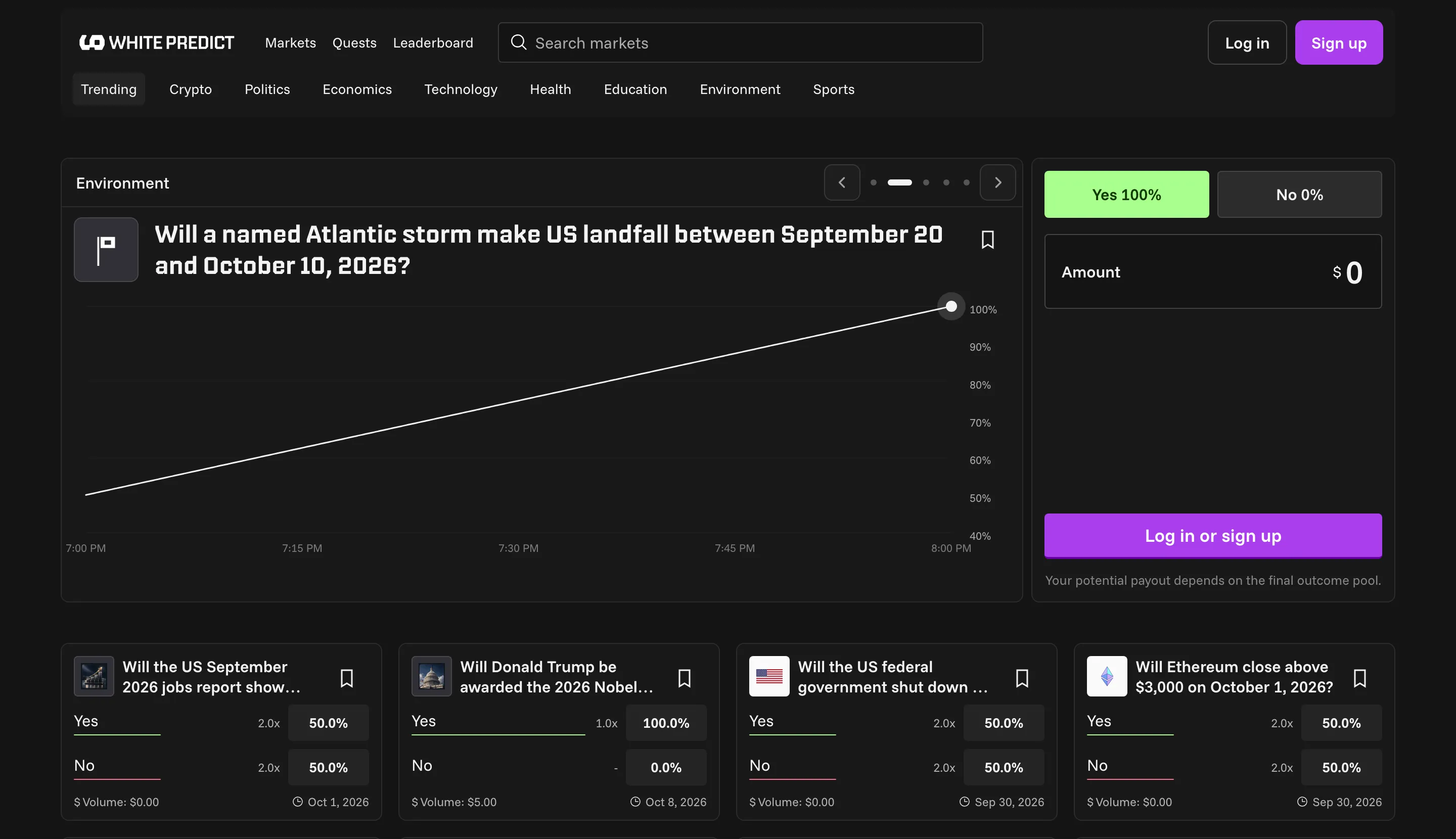
Live on the testnet. The prices are on the cards, so the list is something to act on rather than a menu.
Eight steps stood between wanting to predict and predicting
Download MetaMask or create a wallet.
Write down a seed phrase of twelve words.
Buy ETH or USDC on an exchange, which requires KYC.
Transfer the USDC to the wallet.
Bridge it to the Polygon network.
Pay gas fees in ETH or POL.
Connect the wallet to the market.
Finally, place the prediction.
Sign in with Google or Apple.
Deposit by card, or start without depositing.
Place the prediction.
Seven of the eight are about wallets and moving money. Only the last one is the thing the person came to do.
The seed phrase is gone and we hold no private keys. Privy handles the wallet. So the price of the short list is a third party in the middle of every account.
The agent says when it disagrees
Asked for an opinion, the safe thing for an agent to do is agree with the person holding the money.
I'm at NO, 35% chance.
My call: No. But if you're feeling it, small size only.
It gives its own call and the probability on it. It knows this user has a high-risk appetite and does not argue. It caps the damage instead, at five to ten per cent of bankroll.
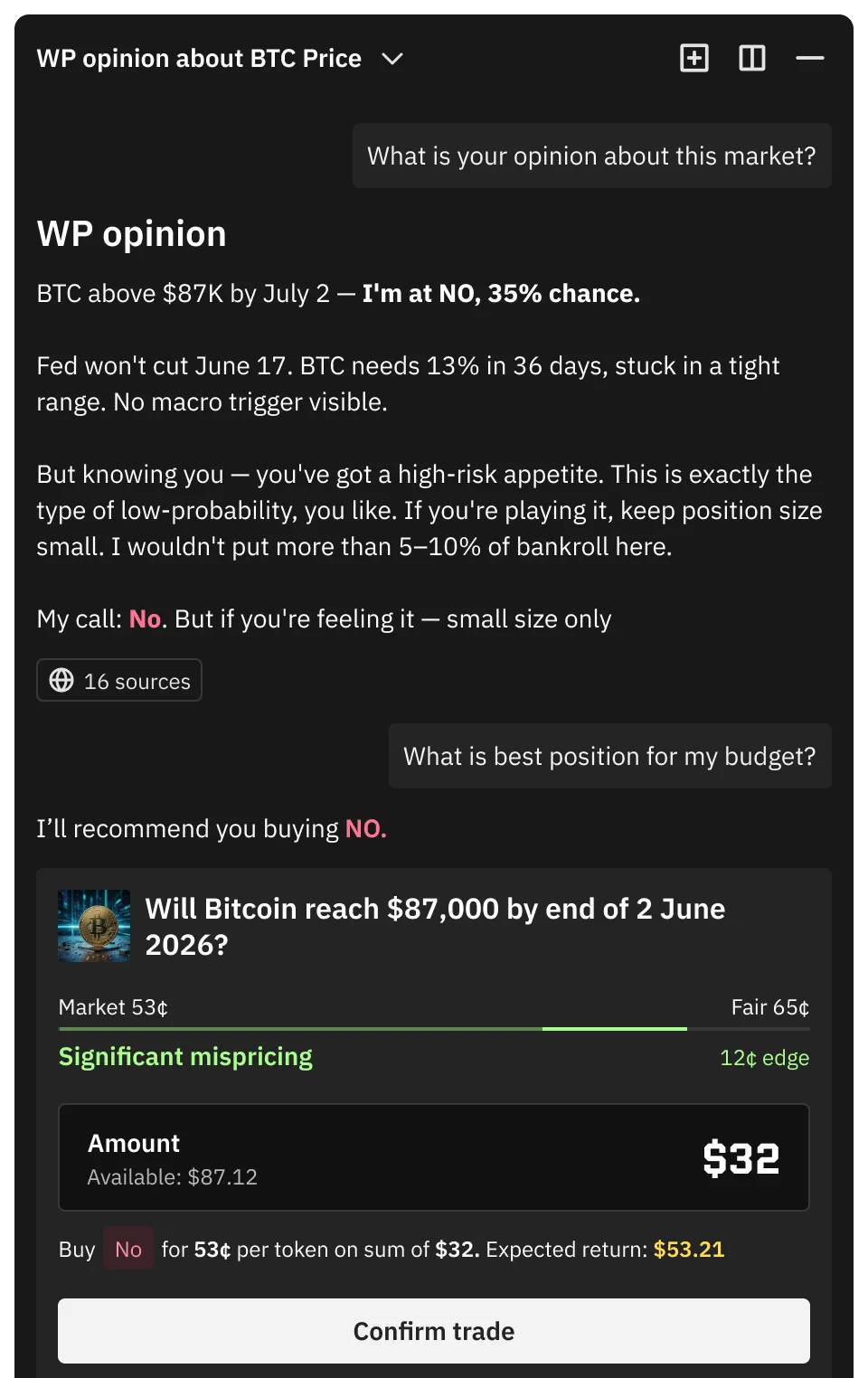
The call, and under it the position it recommends.
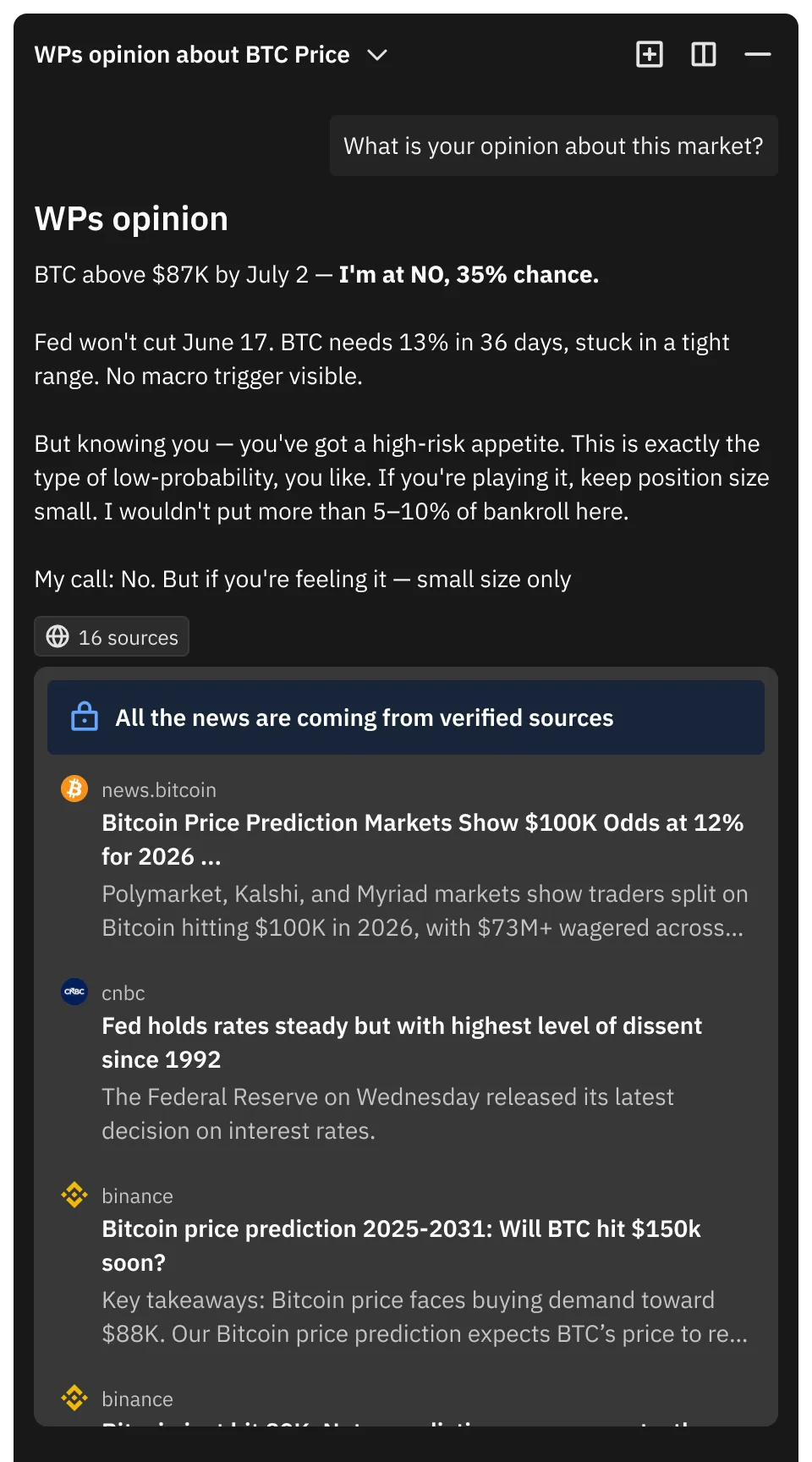
The same answer with its sources opened. Each item carries the outlet it came from.
The agent builds a strategy, then prices the loss
A backtested return with nothing next to it reads as a promise.
ROI for last year. Updated today, 14:54. Simulated performance.
You may lose up to $12.5 while executing this strategy.
The person sets a goal, a market focus and a risk appetite, then writes the rest as instructions. What comes back is a named strategy and a simulated return, on a chart that runs below zero where it lost.
A stop-loss is not optional, and the warning turns it into money before anything is confirmed. The budgeted version is designed and not shipped.
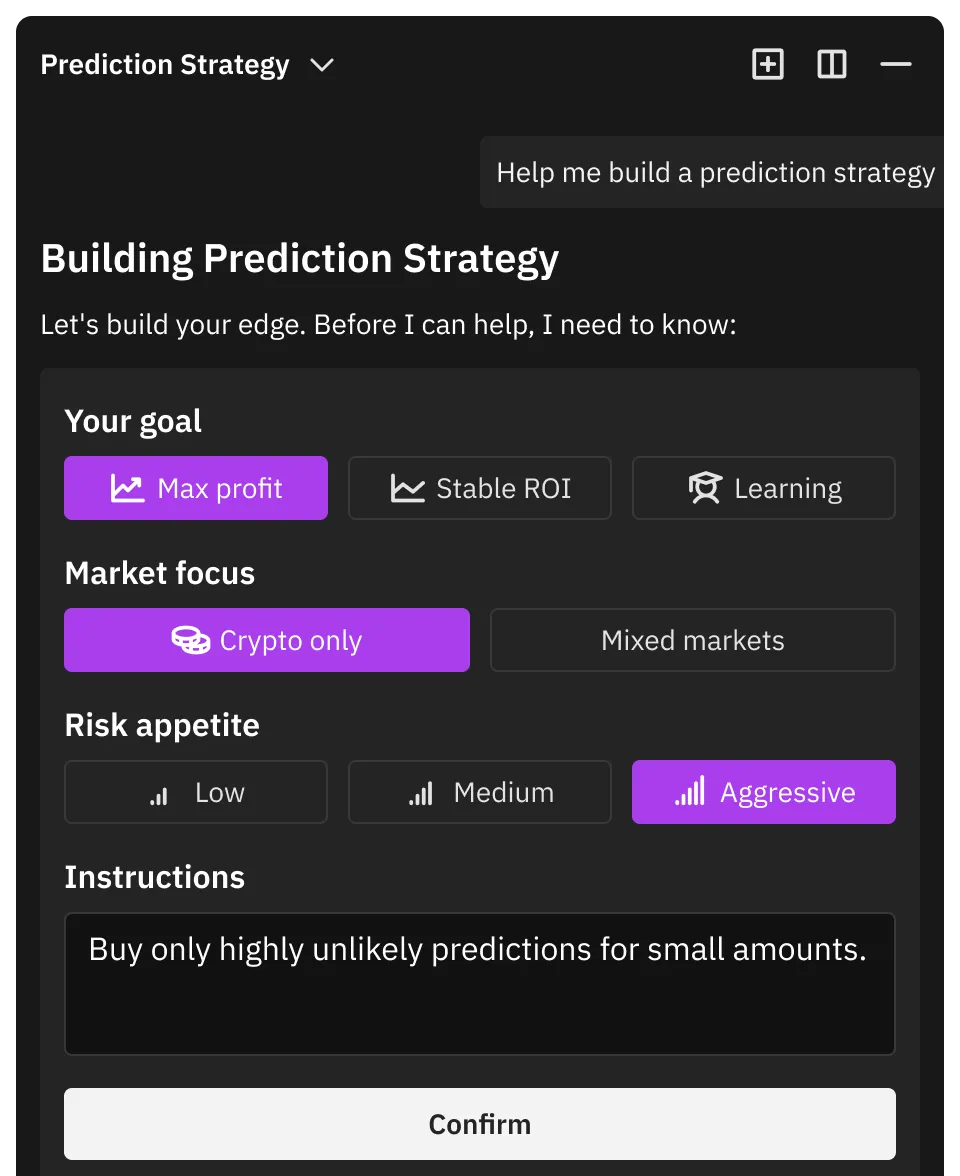
What the agent asks for before it builds anything. The last field is free text.
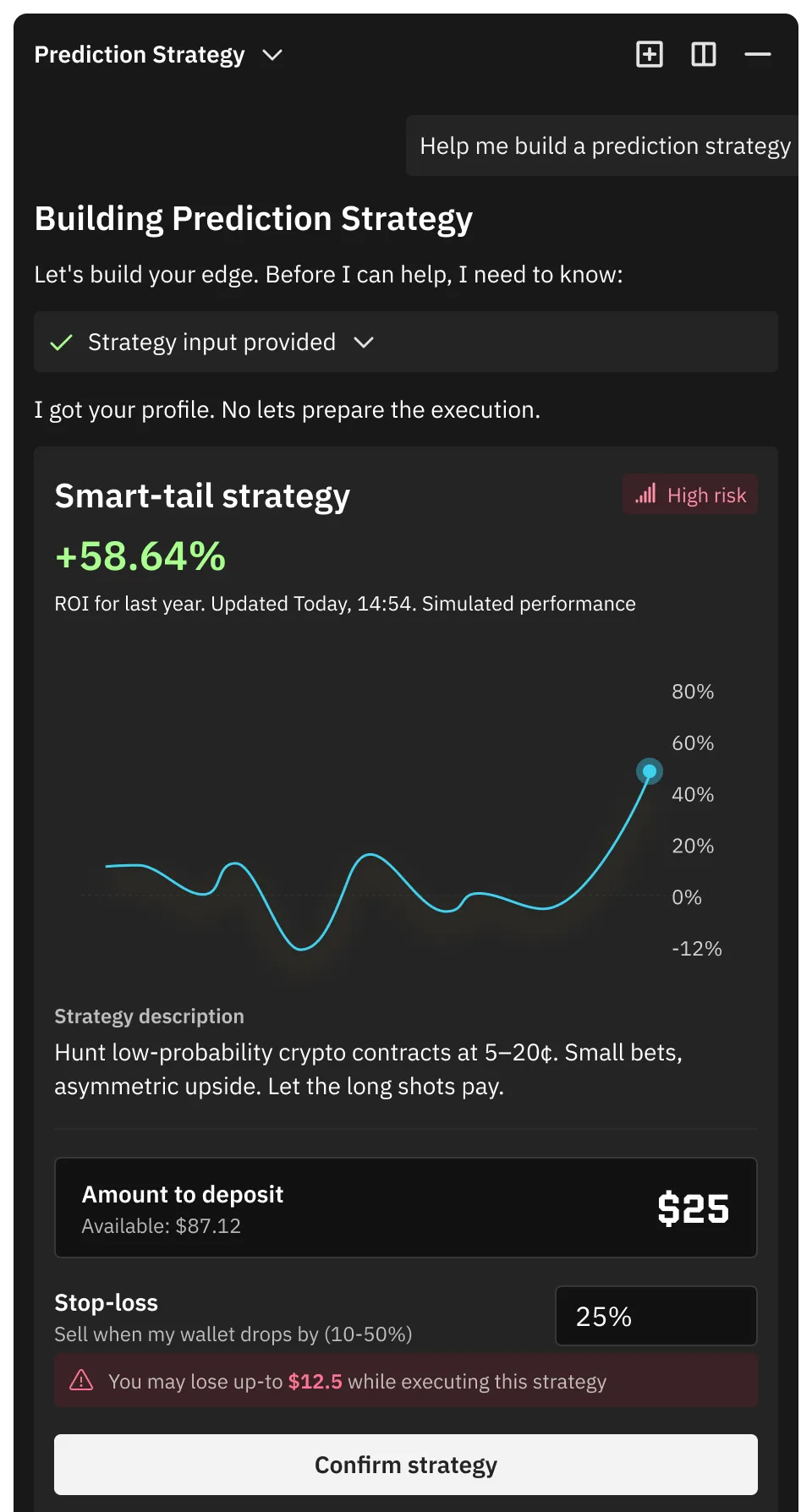
What came back. Simulated, the chart below zero, and the most it can lose stated in money.